19 Jul 2026
How Regional Weather Patterns Drive Attendance Shifts at Southwest Resort Properties
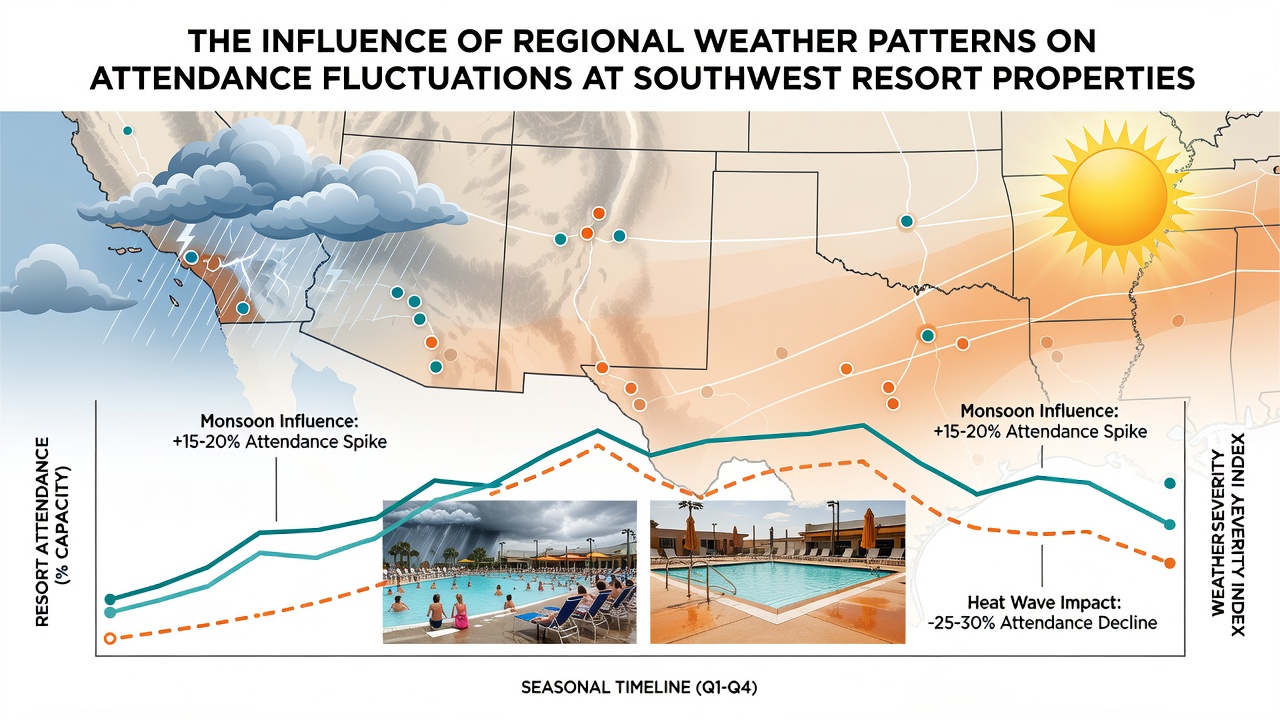
Weather patterns across the American Southwest create measurable shifts in visitor numbers at resort properties throughout Arizona, Nevada, New Mexico, and southern Utah, where extreme temperatures and seasonal precipitation directly influence booking volumes and daily arrivals. Data collected by regional tourism agencies show consistent correlations between temperature spikes, monsoon activity, and attendance drops or surges at properties ranging from desert golf resorts to mountain retreats near ski areas.
Core Climate Features of the Southwest Region
The Southwest experiences wide temperature swings and limited rainfall that set it apart from other U.S. resort markets, with summer highs often exceeding 100 degrees Fahrenheit in low-elevation zones while higher elevations receive afternoon thunderstorms during the North American monsoon period from July through September. Winter months bring mild daytime conditions that attract seasonal visitors from colder northern states, yet overnight lows can dip below freezing in northern New Mexico and Arizona highlands. These patterns produce predictable attendance cycles that resort operators track through occupancy reports and reservation systems.
National Oceanic and Atmospheric Administration records indicate that average July temperatures in Phoenix and Las Vegas have risen steadily over the past two decades, and this warming trend coincides with documented declines in mid-summer occupancy at many lower-elevation properties. In contrast, resorts situated above 6,000 feet maintain steadier summer attendance because cooler nighttime temperatures offset daytime heat for guests seeking outdoor recreation.
Summer Heat and Attendance Declines
Extreme heat from June through August drives the most pronounced attendance reductions at Southwest resorts located in valley and basin locations, where daytime temperatures routinely surpass 105 degrees and limit outdoor activities during peak daylight hours. Properties near Phoenix and Tucson report occupancy rates that fall 15 to 25 percent below shoulder-season averages during the hottest weeks, while bookings shift toward indoor amenities such as spas and gaming floors. Resorts that offer extensive air-conditioned facilities or indoor water features experience smaller drops compared with those focused on golf, hiking, or pool-based recreation.
Resort management teams monitor heat advisories issued by the National Weather Service and adjust staffing and marketing accordingly, often promoting evening events or early-morning activities to retain guests who might otherwise shorten their stays. One analysis of reservation data from 2023 through 2025 revealed that properties implementing aggressive heat-mitigation programs saw attendance stabilize more quickly after temperature spikes than competitors without such measures.
Monsoon Season Effects on Visitor Behavior
The North American monsoon brings concentrated rainfall and lightning activity to much of Arizona and New Mexico between mid-July and early September, creating both disruptions and opportunities for resort operators. Flash flooding can close roads and trails, yet the accompanying cloud cover and lower temperatures sometimes increase demand for short-term bookings among local residents seeking cooler escapes. Attendance figures from New Mexico mountain resorts show modest upticks during active monsoon periods when daytime highs remain below 85 degrees, whereas desert properties closer to the Mexican border experience cancellations tied to travel advisories.
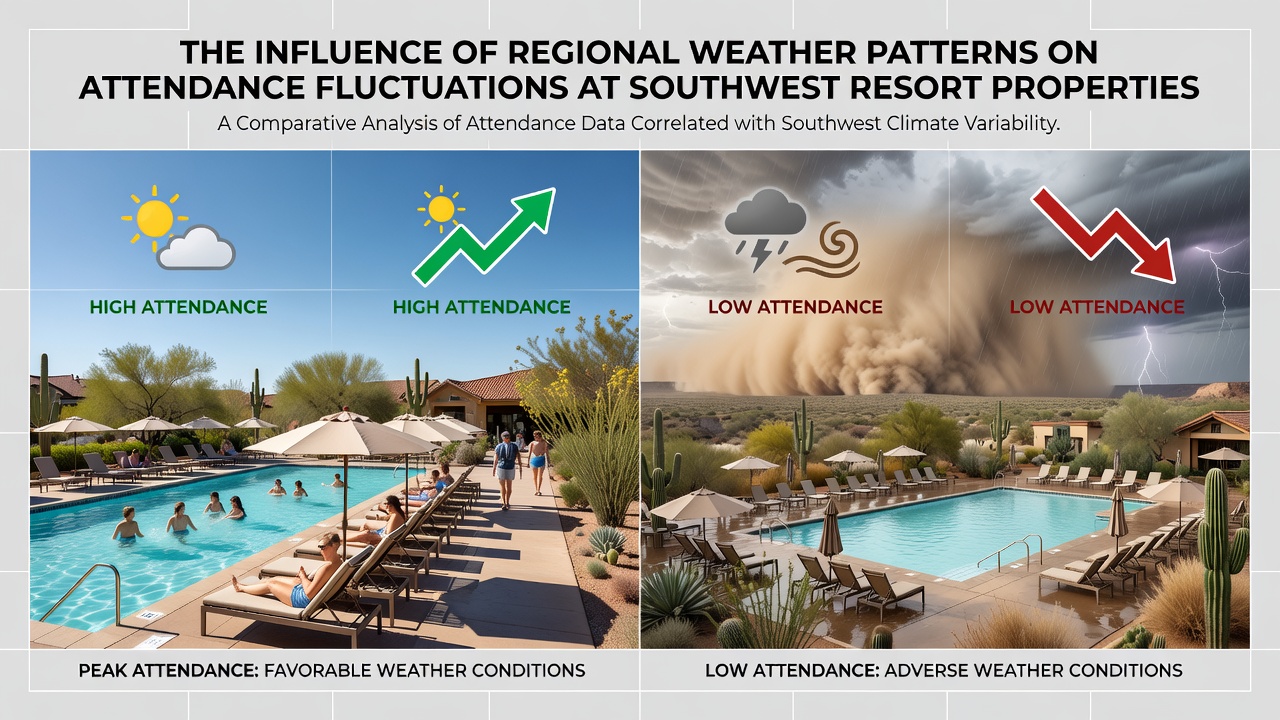
Insurance claims data compiled by regional hospitality associations indicate that monsoon-related property damage remains rare at well-maintained resorts, yet guest perception of risk leads to measurable booking hesitation during forecast periods of heavy rain. Operators respond by highlighting covered walkways, indoor dining options, and flexible cancellation policies to reduce weather-driven attrition.
Winter Patterns and Seasonal Influxes
Mild winter conditions draw significant numbers of visitors from the Midwest and Northeast between November and March, producing occupancy rates that frequently exceed 85 percent at many Arizona and southern Nevada resorts. Snowbird traffic peaks in January and February when average daily highs remain between 65 and 75 degrees, while properties offering proximity to national parks or retirement communities report the strongest demand. Colder outbreaks that bring frost or light snow to higher elevations can temporarily reduce attendance at mountain-adjacent resorts but simultaneously boost interest at lower-desert locations.
Long-range forecasts released by the National Weather Service Climate Prediction Center for the 2025-2026 winter season project above-average temperatures across much of the Southwest, a pattern that could extend the traditional snowbird window into early spring and support steadier attendance at lower-elevation properties through March 2026. Resort revenue reports from previous El Niño winters show similar extensions of peak season when temperatures stay mild.
Looking Ahead to July 2026 Conditions
Projections prepared by university climate researchers suggest that July 2026 may bring continued above-normal temperatures across southern Arizona and Nevada, potentially reinforcing the established pattern of summer attendance declines unless operators expand cooling infrastructure or shift marketing emphasis toward shoulder months. Properties investing in solar shading, misting systems, and enhanced indoor entertainment report smaller year-over-year losses during comparable heat events, according to industry benchmarking studies.
Conclusion
Regional weather patterns exert consistent, measurable influence on attendance at Southwest resort properties through temperature extremes, monsoon precipitation, and winter mildness that together shape booking cycles and operational decisions. Operators who align marketing, staffing, and amenity offerings with these recurring climate signals maintain more stable occupancy across seasons, while data from government and academic sources continue to refine understanding of how shifting temperature baselines may alter future visitor flows.